Industry Insights
Australia’s Big Battery Push Shows Solar Has Entered Its Storage Phase
June 25, 2026
Share:
Share:
Australia just gave the storage industry another reminder: solar’s next big challenge is not simply how to generate more power. It is how to make that power available after the sun goes down.
For years, the clean energy conversation has been dominated by generation. More solar farms. More rooftop panels. More daytime electricity. That still matters, but it is no longer the whole story.
The harder problem is timing.
Solar produces power when the sun is available. Homes, businesses, and grids need power when demand shows up. Those two moments do not always match.
That is why Australia’s latest battery tender matters.
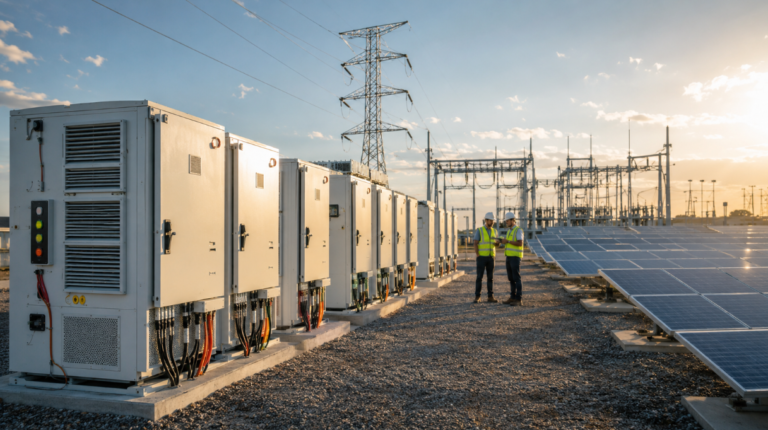
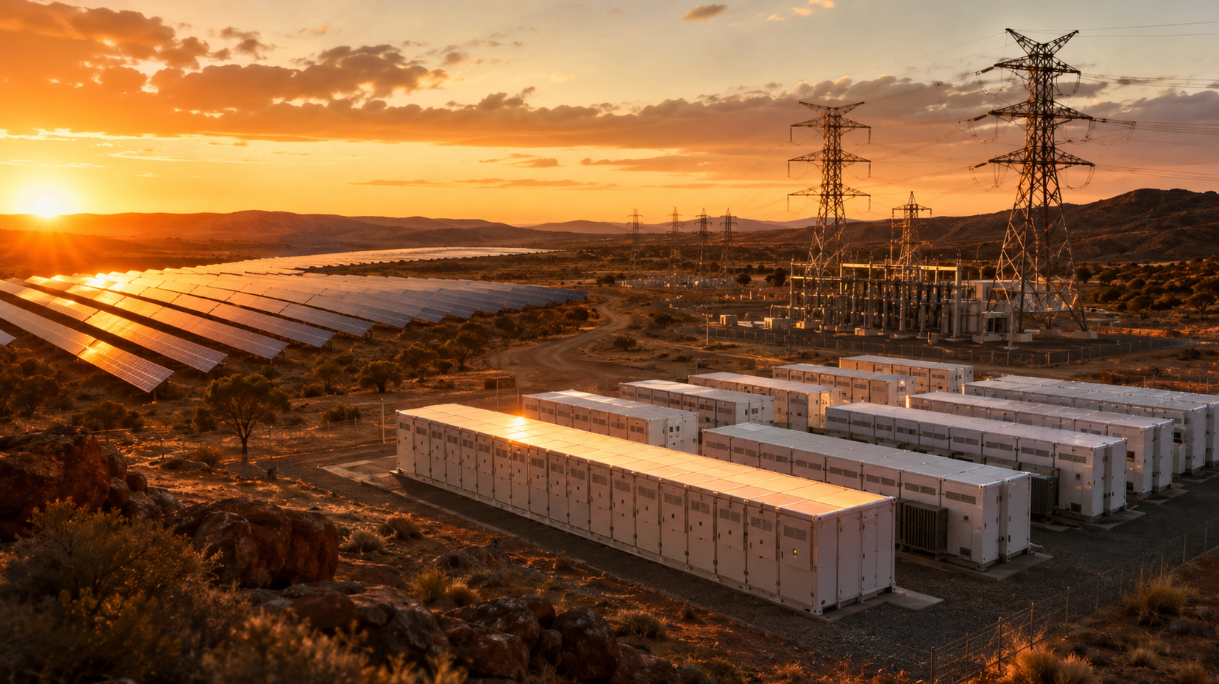
On June 24, the Australian government announced 15 successful energy storage projects under Capacity Investment Scheme Tender 8, with a combined capacity of 4.2 GW / 16.1 GWh. The projects are planned across New South Wales, Queensland, Victoria, and South Australia. According to the government, these batteries are intended to store renewable energy when it is abundant and release it when households and businesses need electricity most.
The headline number is large, but the real story is not just size. It is role.
Battery storage is no longer being treated as a clean energy accessory. It is becoming part of the reliability layer.
Australia’s Capacity Investment Scheme is designed to support renewable generation and clean dispatchable capacity. That distinction matters.
Solar and wind generate electricity. Batteries make that electricity more usable.
Tender 8 targeted 4 GW / 16 GWh of dispatchable capacity in the National Electricity Market. The Australian Department of Climate Change, Energy, the Environment and Water said the tender received 73 bids representing 76.4 GWh of storage capacity, with 15 projects selected for 4.2 GW / 16.1 GWh.
That level of interest says something about where the market is going. Developers are not only building around generation anymore. They are building around flexibility.
A grid with more renewable energy does not just need more production. It needs the ability to move power across time.
That is what batteries do.
Solar has an obvious strength: it can produce clean electricity during the day. But electricity demand often peaks later.
Many households use more power in the evening. People come home, cook dinner, run appliances, charge devices, and use heating or cooling. By then, solar output is falling or already gone.
That timing gap is one of the reasons storage has moved from optional to essential.
Without storage, solar is mostly a generation story. With storage, solar becomes a reliability story.
Batteries allow electricity produced during sunny or low-demand periods to be used later, when demand is higher or the grid is under pressure. That is a simple idea, but it changes the economics and usefulness of renewable power.
Australia is only one market, but the problem it is trying to solve is not uniquely Australian. Any country adding more solar and wind has to answer the same question:
How do you keep electricity dependable when generation varies by weather and time of day?
Transmission helps. Demand response helps. Flexible generation helps. But batteries are becoming one of the most direct answers because they separate the time electricity is produced from the time electricity is used.
A few years ago, large battery projects still sounded experimental to many people. That is no longer the case.
A 16.1 GWh storage procurement is not a small demonstration project. It is infrastructure planning.
The Australian government also said the 15 projects are expected to unlock around A$6 billion in private investment and create more than 6,800 jobs across construction, operations, and maintenance. Those figures should be read as government projections, not completed outcomes. Still, they show how battery storage is now being discussed: not as a niche technology, but as part of the energy system.
This is the shift worth paying attention to.
Solar and wind are no longer judged only by how much electricity they can produce. They are increasingly judged by whether they can support a reliable power system.
Storage is the bridge between renewable generation and real-world dependability.
A household does not need a grid-scale battery. But the basic problem is familiar.
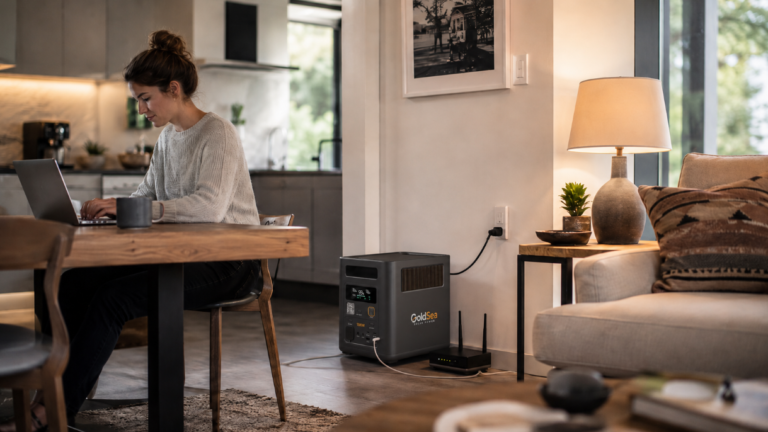
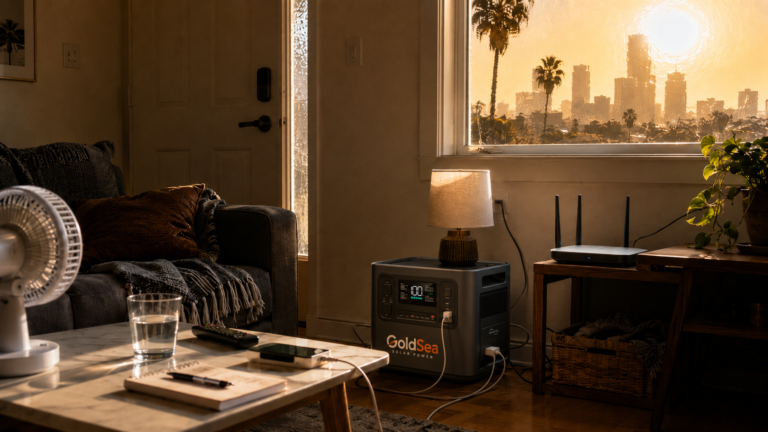
A family wants power during an outage. A camper wants electricity after sunset. An RV user may want to store solar energy during the day and use it at night. Someone working outdoors may need quiet, clean power without running a fuel generator.
This is where portable power stations and solar generators fit into the broader storage story.
They are not grid-scale batteries. They are not a replacement for professionally installed whole-home energy systems. They are smaller consumer tools built around the same principle:
Store energy first. Use it when needed.
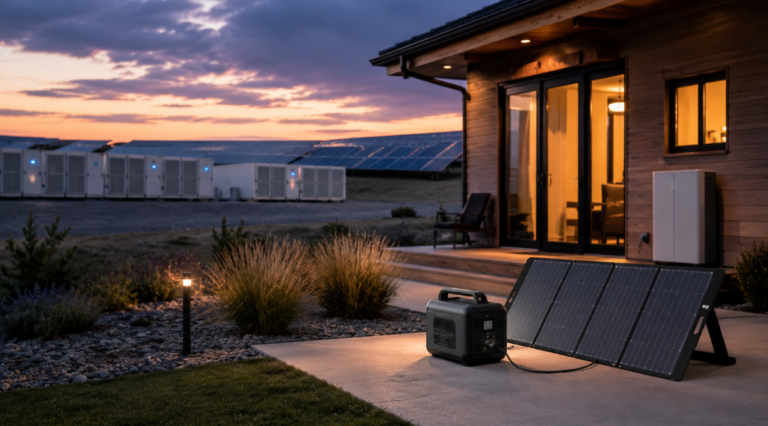
For everyday users, this shift shows up in much smaller forms: a power station in the garage, a solar panel at a campsite, or a backup setup ready for the next outage.
The scale is different. The logic is the same.
Solar panels collect energy. Batteries make that energy available later.
The storage boom also changes how consumers should think about portable energy products.
A solar panel alone is not always enough. A battery alone is useful, but it eventually needs to be recharged. A solar generator system combines both sides of the equation: generation and storage.
That is why buyers should look beyond headline capacity.
Watt-hours matter, but they are not the only number that counts. Output power, charging speed, solar input, battery chemistry, portability, noise, safety features, and real use case all matter.
A weekend camping setup is not the same as emergency home backup. Charging phones and lights is not the same as running a refrigerator. A compact power station for travel is different from a larger system built for longer outages.
The broader energy market is moving in the same direction. The better question is no longer only how much electricity can be generated. It is how that electricity can be stored, managed, and delivered when demand appears.
Australia’s big battery push points to the next stage of renewable energy.
The first phase was about building more clean generation. The next phase is about making that generation dependable.
For the grid, that means large-scale battery storage, dispatchable capacity, and better energy management. For households and outdoor users, it means more practical backup power, portable power stations, solar panels, and solar generator systems.
Clean power is useful. Stored clean power is more useful.
The technology is scaling up, but the basic need is still simple: store power before you need it.
That is true for a national electricity grid. It is also true for a home, a campsite, an RV, or an emergency kit.
Solar has entered its storage phase. Battery storage is what makes that phase work.