Industry Insights
Big Batteries Are Growing Fast, But Homes Still Need Their Own Backup Layer
June 27, 2026
Share:
Share:
The U.S. power grid is adding batteries at a pace that would have seemed unlikely just a decade ago.
According to the U.S. Energy Information Administration, developers expect to add a record amount of utility-scale generating capacity in 2026, with solar and battery storage making up the largest shares of that growth. Solar is set to lead new additions, while battery storage continues to become one of the fastest-growing parts of the grid.
That marks a real shift in how the power system is being built.
For years, clean energy conversations focused mostly on generation: how much solar could be installed, how much electricity could be produced, and how quickly renewable capacity could scale. Today, the conversation is moving toward timing, flexibility, and resilience.
A solar panel produces power when the sun is available. A battery helps decide when that power can actually be used.
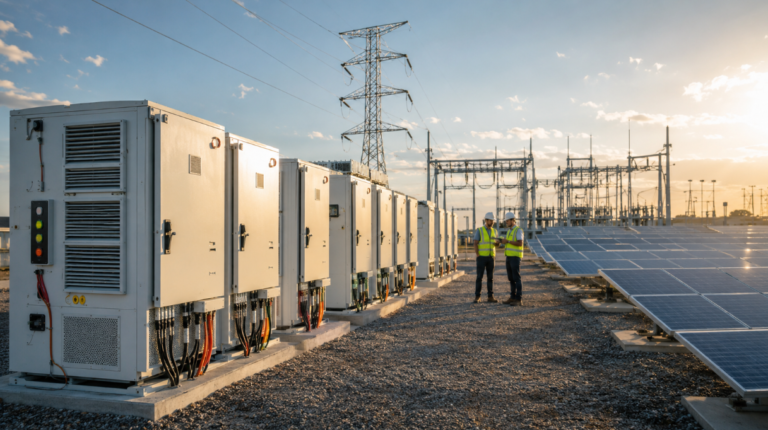
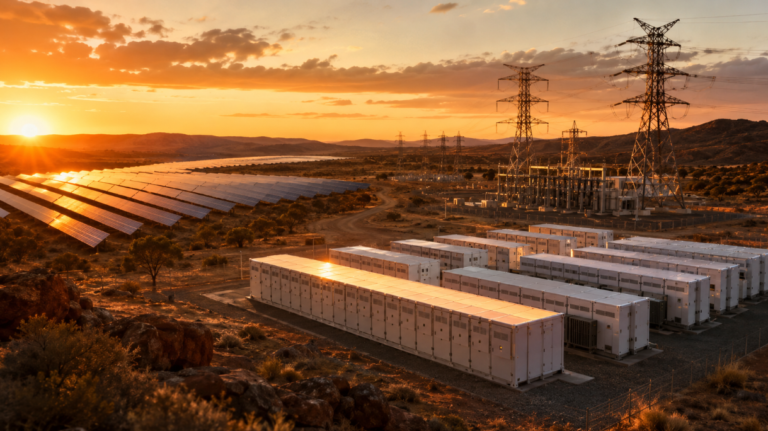
For utilities, that is a major advantage. Grid-scale batteries can store electricity when generation is high and release it when demand rises. They can support evening peaks, smooth out fluctuations, and make renewable energy more useful after sunset.
But there is an important distinction that often gets overlooked: a stronger grid does not automatically mean every home has backup power during an outage.
When people hear that the grid is adding more storage, it can sound as if backup power is becoming a solved problem. At the utility level, more storage can improve reliability and give grid operators more flexibility. But many outages happen much closer to the customer.
A storm can take down local distribution lines. A transformer can fail. Trees can fall across neighborhood circuits. Flooding, wildfire risk, extreme heat, and overloaded local infrastructure can all interrupt power before electricity ever reaches the home.
A large battery project connected to the grid can help the overall system. It does not necessarily keep your refrigerator, router, phone, fan, laptop, or medical device running when the line serving your house is down.
That is where a household backup layer becomes useful.
A portable power station is not a replacement for the grid. It is not the same as a permanently installed whole-home battery. It is not designed to run every appliance in a house for days without limits.
Its value is more practical.
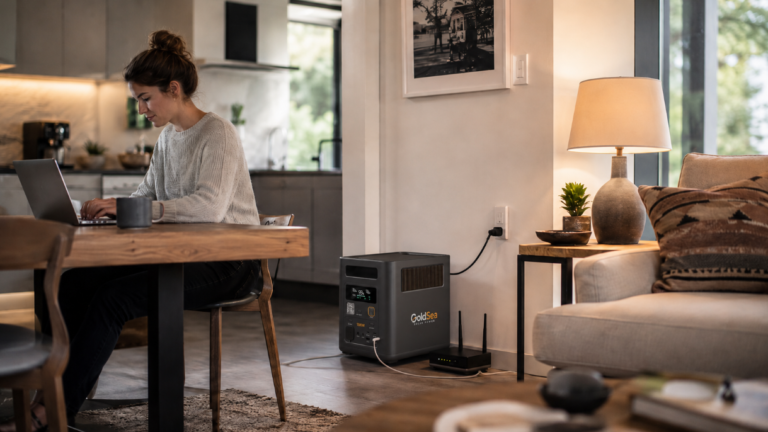
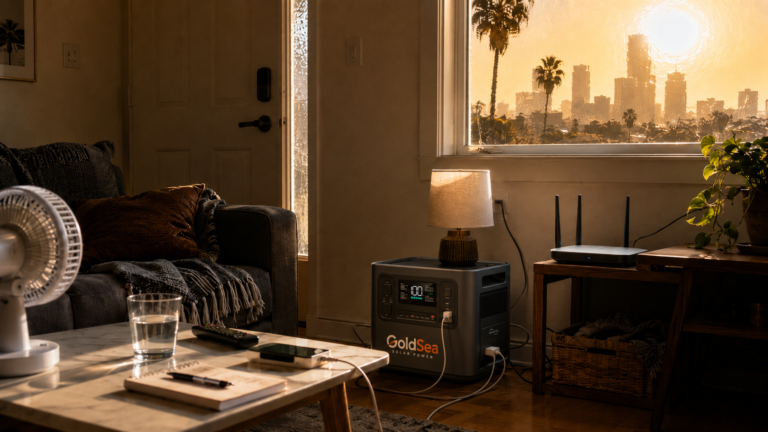
It gives a household a controllable reserve of electricity for essential devices. Phones can stay charged. A Wi-Fi router can remain online. Lights can run at night. A fan can help during a hot evening. A laptop can keep working. Some small appliances may run for a limited period, depending on battery capacity and output power.
That kind of backup will not solve every outage. But it can make the first few hours of one much easier to manage.
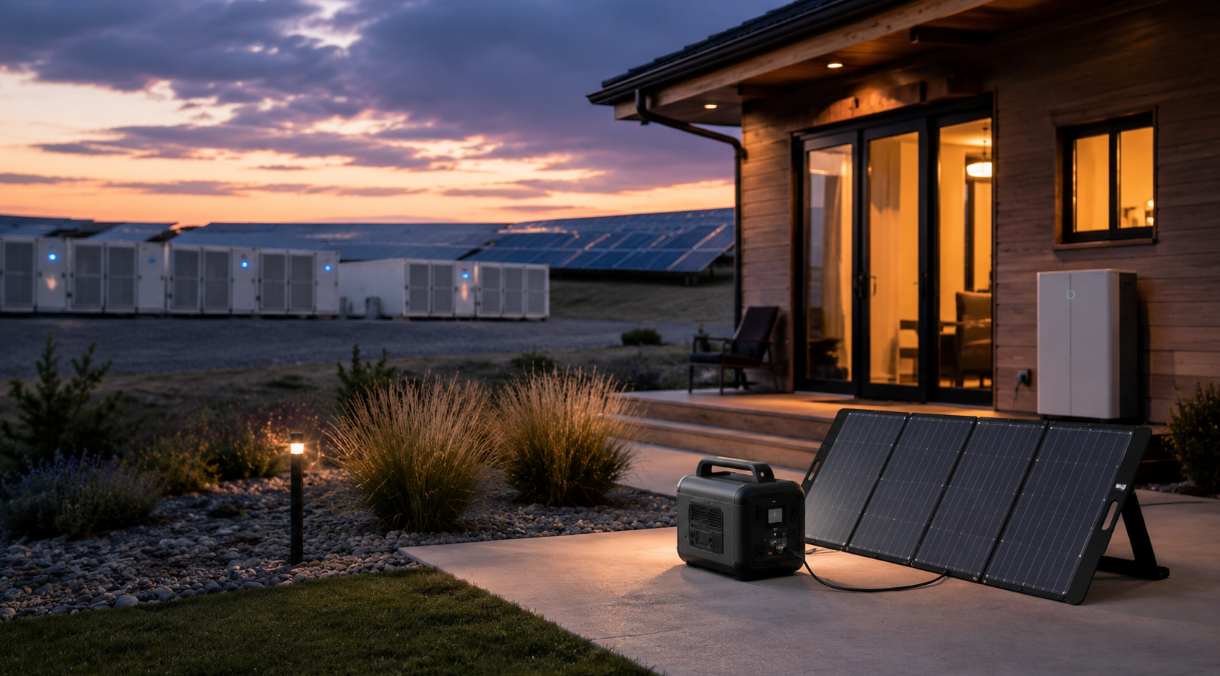
This is why portable power stations and solar generators are starting to occupy a different place in the market. They are no longer only camping gear or outdoor accessories. For many households, they are becoming part of a broader home resilience plan.
A family may use the grid every day and still want a backup option. They may not be ready for a permanently installed home battery. They may not want to store fuel or run a gas generator. They may simply want a quiet, indoor-safe way to keep the most important devices powered when the lights go out.
That is the gap portable systems can fill.
Solar generators add another layer to the equation. A power station stores energy. A portable solar panel gives users a way to recharge it when sunlight and conditions allow.
That does not mean unlimited power. Weather, panel size, solar input limits, and actual electricity use all matter. A small solar setup will not turn a portable battery into a whole-home power plant.
But the basic idea is still valuable: battery storage gives you a reserve, and solar charging can help extend that reserve when an outage lasts longer than expected.
The key is to size the system around real needs.
A smaller power station may be enough for phones, lights, and a router. A larger unit may support a laptop, fan, mini fridge, CPAP machine, or selected small appliances. Running a full-size refrigerator, microwave, heater, air conditioner, or multiple high-demand devices requires much more capacity and output power.
This is where many buyers get confused. Battery capacity is usually measured in watt-hours. Output power is measured in watts. Both numbers matter.
Capacity tells you how much energy the unit can store. Output tells you what it can run at one time. Solar input tells you how quickly it may recharge from panels under good conditions. Real runtime depends on the devices connected, their power draw, and how efficiently the system converts stored energy into usable power.
A practical backup plan should start with a list, not a product page.
What needs to stay on during an outage?
How many hours does each device need to run?
Does anything have a startup surge?
Will the power station be recharged from a wall outlet, a vehicle, solar panels, or a mix of sources?
Will it be stored for emergencies, used outdoors, or moved between both?
Those questions matter more than a headline capacity number.
The rise of grid-scale batteries is still good news. It shows that the power system is adapting to a more electric, more renewable, and more demanding future. Solar without storage has limits. Storage makes clean power more flexible. A grid with more batteries is better prepared than one without them.
But household resilience is personal.
The grid can become stronger and still experience local failures. Utilities can add more batteries and still need time to repair damaged lines. Solar capacity can grow quickly while one neighborhood still sits in the dark after a storm.
For homeowners, renters, campers, and remote workers, the most useful question is not whether large batteries are coming to the grid. They are.
The better question is: what layer of backup power can you actually control?
For some households, that layer may be simple: a charged portable power station, a few priority devices, and a realistic plan for how long they need to stay powered. For others, it may include portable solar panels, a larger battery system, or a combination of backup options.
The goal is not to overbuild. The goal is to match the backup layer to the problem.
Big batteries are changing the grid. Smaller batteries are changing how households prepare.
Both trends can be true at the same time.