Industry Insights
Texas Solar Is Closing In on Coal. Storage Is Where the Real Fight Starts.
June 23, 2026
Share:
Share:
Texas has never been a quiet energy state.
Oil, gas, pipelines, refineries, wind farms, transmission lines — the state has long carried a large part of America’s power story. Now solar is pushing into that story with unusual speed.
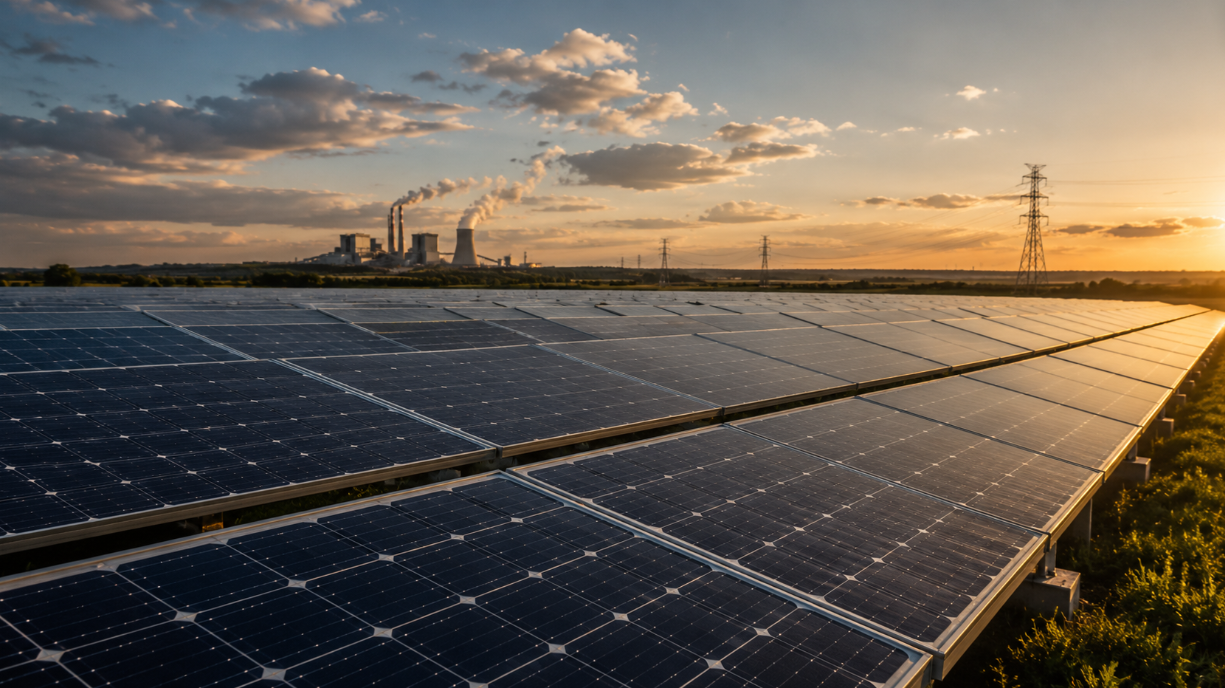
According to the U.S. Energy Information Administration, utility-scale solar generation in ERCOT is expected to reach 78 billion kilowatt-hours in 2026, compared with 60 billion kilowatt-hours from coal. If that forecast holds, solar would move ahead of coal across most of the Texas grid on an annual basis for the first time.
That is more than a symbolic milestone. It shows how quickly the power mix can change when demand is rising, new capacity is being built, and solar economics keep improving.
Coal is not disappearing from the Texas grid. Natural gas remains the largest source of electricity in ERCOT. But the direction is hard to miss. Solar is no longer a side story. It is moving into the main supply stack.
A power mix that is changing faster than expected
Between 2021 and 2025, solar’s share of ERCOT generation grew from 4% to 12%. Over the same period, coal’s share fell from 19% to 13%.
That shift did not happen in a quiet market. Texas electricity demand kept climbing as the state added more industrial activity, more electrification, more cryptocurrency mining, and a wave of data center development tied to cloud computing and artificial intelligence.
The result is a grid that needs more power, more flexibility, and faster buildout.
Solar fits part of that need because it can be deployed faster than many traditional power plants. Texas also has strong sunlight, large land availability, and a power market that rewards new generation when demand is high.
But the faster solar grows, the more obvious the next problem becomes: generation alone is not enough.
Storage moves from supporting role to core infrastructure
Solar is powerful, but it is not constant. It produces most of its output during daylight hours. Demand does not always follow the sun.
Homes still need electricity after sunset. Businesses keep operating during evening peaks. Data centers run around the clock. During heat waves, air conditioners can keep pulling power late into the night.
That is where storage starts to matter.
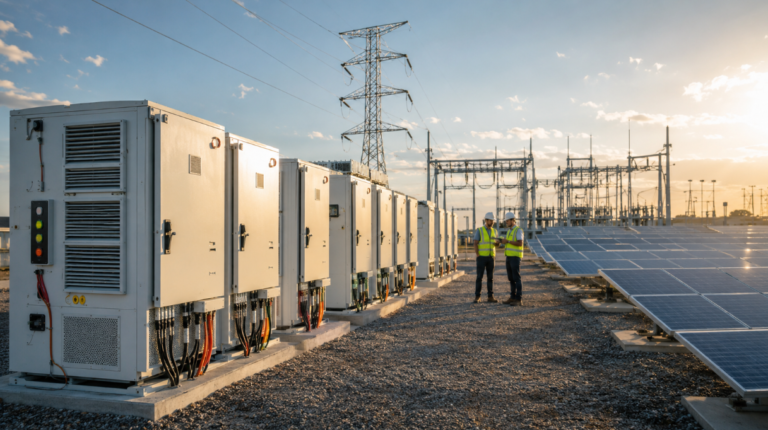
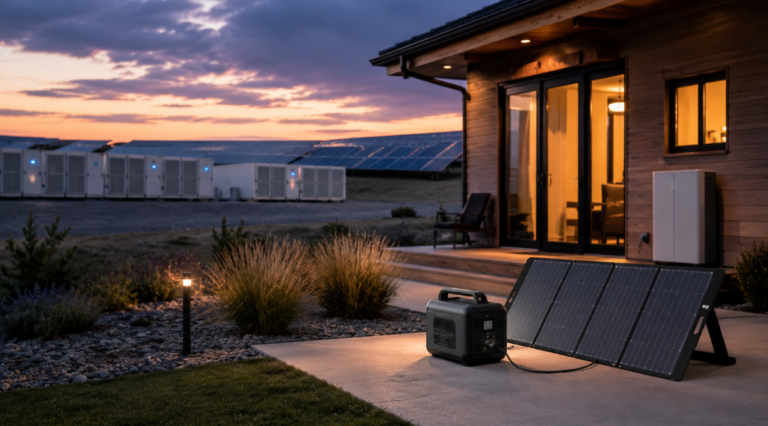
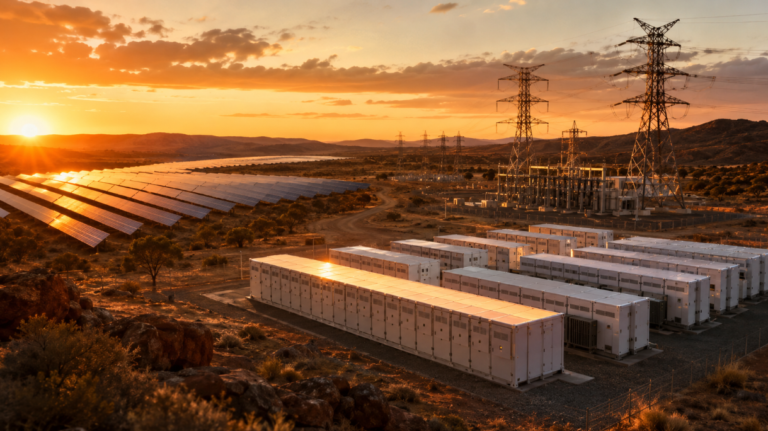
Large battery systems can store excess solar power and release it when supply tightens. At the household level, the same basic logic applies in a smaller, more practical form. A solar panel collects energy. A battery stores it. A portable power station or solar generator turns that stored energy into usable backup power when the grid is down, when someone is off-grid, or when essential devices need support.
Texas is already showing this pattern at utility scale. More projects are combining solar generation with battery storage because solar without storage only solves part of the problem.
The same idea is becoming more relevant for homeowners, RV users, campers, and anyone preparing for outages.
Rising demand changes the backup power conversation
Texas is not adding solar only because renewables are popular. It is adding new resources because demand keeps moving higher.
Reuters recently reported that ERCOT is tracking more than 438,000 MW of large-load requests, with nearly 89% tied to data centers. Not all of those projects will be built, but the number shows how aggressive the demand pipeline has become.
That matters because electricity is becoming a more competitive resource.
Large users want fast grid connections. Utilities and grid operators need to protect reliability. Regulators are trying to decide who pays for upgrades and how quickly new load should be allowed to connect.
For ordinary households, this does not mean a nearby data center will automatically cause a blackout. That would be too simple. The bigger point is that power reliability is becoming a planning issue at every level.
Grid operators are planning for it. Large companies are planning for it. Households should not ignore it.
Backup power starts with the loads that matter
Most homes do not need to replace the grid. For most families, that is neither realistic nor affordable.
A better starting point is essential backup.
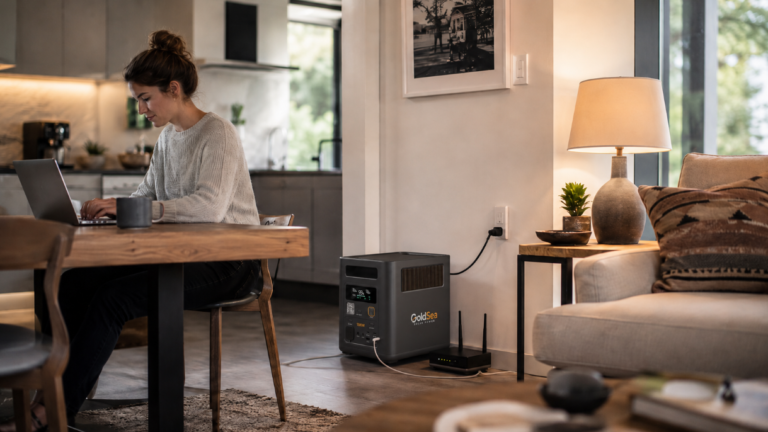
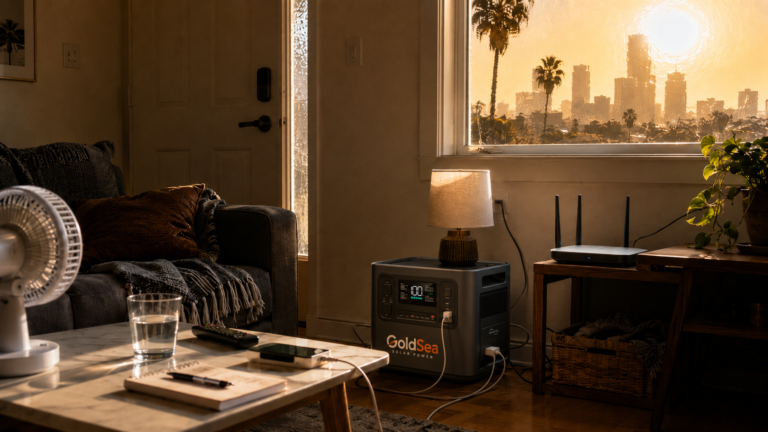
During an outage, the priority is usually not running every appliance in the house. It is keeping phones charged, lights on, routers working, medical devices supported, fans running, or a small refrigerator powered long enough to prevent food loss.
That is where portable power stations and solar generators make sense.
They are not the same as whole-home battery systems. They are smaller, more flexible, and easier to move. They can be used at home, in an apartment, on a camping trip, in an RV, or during an emergency.
Paired with portable solar panels, they can also extend backup time when sunlight is available. That does not turn a compact battery into a power plant, but it does give users more options than a battery alone.
Practical solar starts with a real load list
The Texas solar story is often discussed at grid scale, but the lesson also travels down to the household level.
Solar power is becoming more normal. Storage is becoming more necessary. Flexible power is becoming more valuable.
For a household, the practical questions are straightforward:
Which devices need to stay on during an outage?
How many hours of backup power are needed?
Will the system be used indoors, outdoors, in an RV, or across multiple locations?
Would solar recharging help during longer interruptions?
How much battery capacity is enough without overspending?
These questions matter more than chasing the largest number on a product page. A reliable backup setup starts with real use cases, not oversized claims.
A small apartment might only need backup for phones, lights, a laptop, and internet equipment. A camping setup might need power for a portable fridge, camera gear, and small cooking devices. A household in a storm-prone area might care more about longer runtime and solar recharging.
The right system depends on the job.
Texas is showing the next layer of the energy transition
Solar passing coal in ERCOT would have sounded unlikely to many people not long ago. Now it is becoming a forecasted milestone.
But the next stage will not be only about installing more solar panels. It will be about making power more flexible — through storage, smarter load planning, better grid rules, and more backup options at the edge.
For home energy users, the lesson is practical rather than political.
The grid is changing. Power demand is rising. Solar is gaining ground. Storage is moving closer to the center of the conversation.
A portable power station will not replace the grid. A solar generator will not power every home through every outage. But for essential backup, outdoor use, and emergency planning, small-scale solar and battery systems are becoming much easier to justify.
Texas is showing the larger pattern first.
More solar is coming. More demand is coming with it.
The real fight starts with storage.