Industry Insights
Sodium-Ion Batteries Are Entering the Race as Energy Storage Moves Beyond Lithium
June 30, 2026
Share:
Share:
For more than a decade, lithium has defined how most people think about batteries.
Smartphones, laptops, electric vehicles, portable power stations, home energy storage systems, and even large grid-scale battery projects have all been built around lithium-ion technology. For everyday consumers, lithium batteries are no longer just a technical term. They have become the default foundation of modern power products. Higher capacity, faster charging, longer cycle life, and safer battery design — most of these familiar selling points have been built around lithium.
But the energy storage industry is entering a new stage.
Sodium-ion batteries are moving back into the spotlight, not because they are about to replace lithium batteries overnight, and not because lithium-based technology has reached the end of the road. A more accurate way to look at it is this: as demand grows across power grids, renewable energy, data centers, and home backup systems, the market can no longer rely on one battery chemistry alone.
Recent industry moves point in that direction. General Motors and Peak Energy are working on sodium-ion batteries for stationary energy storage, with plans to begin production in Michigan in the future. CATL has also signed a large-scale supply agreement for sodium-ion energy storage systems. When automakers, battery giants, and energy companies are all paying attention to sodium-ion, it suggests that energy storage is shifting from a single dominant technology path toward a market where multiple battery chemistries can coexist.
This is not a story about one technology defeating another.
It is more about the energy storage industry becoming mature enough to divide the work.
Lithium-based batteries will remain central to the market for a long time. LFP batteries, in particular, have already built a strong position in portable power stations, solar generators, home backup systems, and some stationary storage projects.
Their advantages are clear: relatively stable safety performance, long cycle life, mature manufacturing, and supply chains that have already been tested in commercial use. For consumer energy storage products, those advantages matter far more than a new battery concept that has not yet reached scale.
The opportunity for sodium-ion is not to replace those mature chemistries immediately. Its more realistic opening is in applications where weight and size matter less, but cost, safety, temperature tolerance, and large-scale deployment matter more.
Stationary storage is the clearest example.
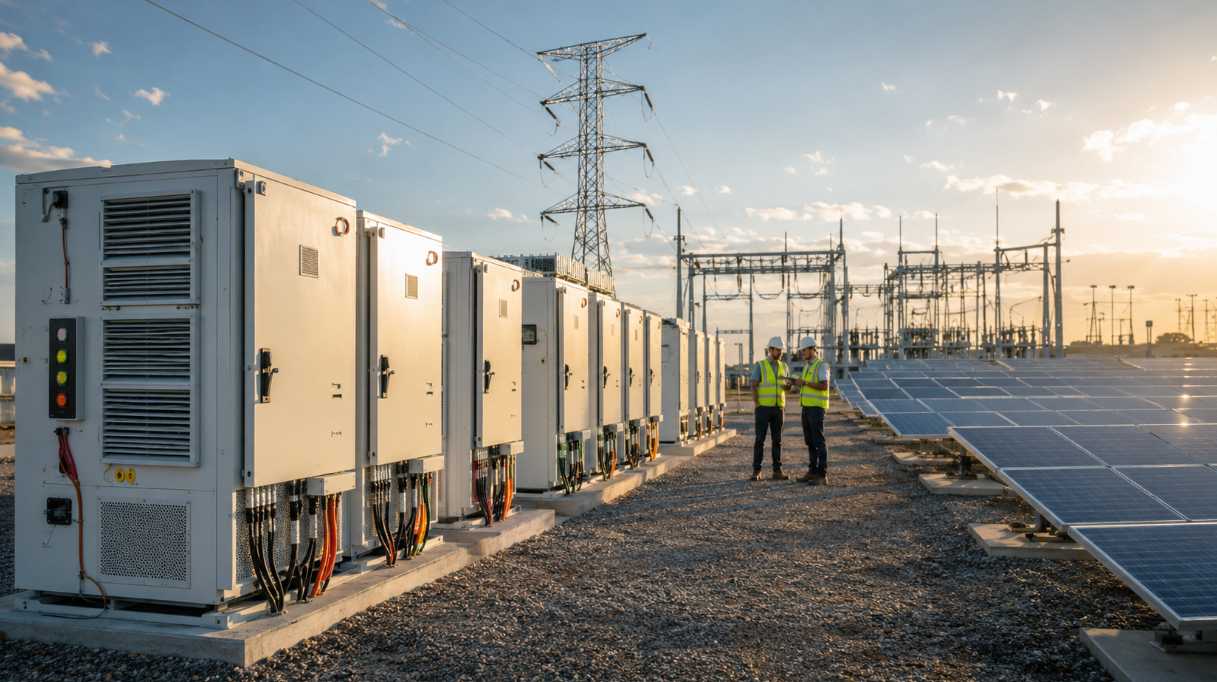
Electric vehicles need battery packs to be as light and compact as possible because weight and space directly affect driving range. But a storage cabinet installed on the ground, a backup power system beside a data center, or a large battery container used for grid balancing has a different set of priorities.
These systems do not need to move with a vehicle. They do not need to fit into a limited chassis space. What matters more is whether they can operate reliably over the long term, handle different temperature conditions, reduce system cost, and support large-scale deployment.
That is why sodium-ion is getting fresh attention.
Sodium is more abundant than lithium. Its material cost pressure is generally lower, and it is less dependent on supply chains tied to lithium, nickel, and cobalt. In large-scale storage applications, that material logic is practical and increasingly attractive.
In the past, portable power stations were often associated with camping, RV travel, and outdoor activities. Those use cases still matter, but the boundaries of the storage industry have clearly expanded.
AI data centers are driving up electricity demand. Renewable energy deployment continues to grow, and solar and wind power need storage to smooth out their output. Power grids are facing more stress from heatwaves, storms, extreme weather, and peak demand. Households are also paying more attention to backup power during outages, instead of seeing power stations only as outdoor gear.
Together, these forces are changing the underlying logic of the energy storage market.
The old question was simple: which battery is better?
The new question is more specific: what kind of battery makes sense for each use case?
Electric vehicles need high energy density. Portable power stations need a balance of safety, cycle life, output power, and portability. Home energy storage systems place more emphasis on stability, long-term cost, and system safety. Data centers and grid storage care more about scalability, reliability, temperature tolerance, and total system cost.
As the number of use cases grows, it becomes harder for one battery chemistry to serve every need.
That is the real meaning behind sodium-ion’s entry into the race.
It does not mean lithium batteries have failed. It means energy storage is becoming a large and complex enough industry that different battery technologies will find different roles.
Based on current industry momentum, sodium-ion’s most realistic early path is still stationary energy storage.
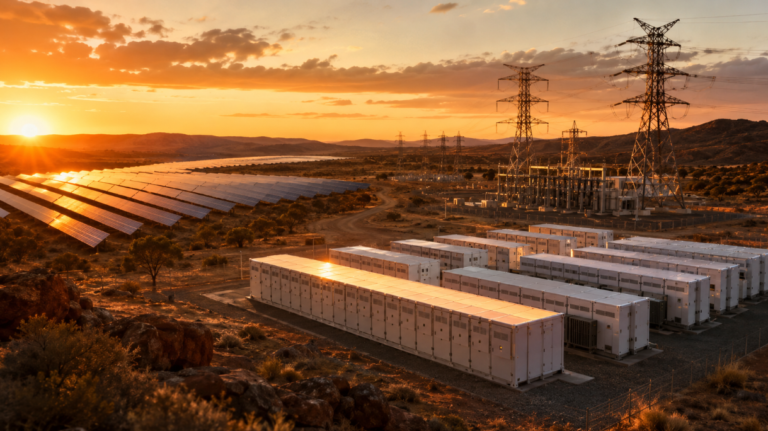
Data center backup power, grid-scale storage, renewable energy storage, and commercial peak-shaving applications are more likely to adopt sodium-ion before consumer portable power stations do.
The reason is straightforward.
In stationary storage, the battery does not need to be carried by a person or fitted into a car chassis. Lower energy density is not necessarily a fatal weakness. If the system cost, safety performance, cycle life, and operating stability are strong enough, sodium-ion can still earn a place in real-world projects.
That also explains why GM and Peak Energy are focusing on stationary storage.
The goal is not to market sodium-ion as the next dominant EV battery in the near term. Nor is it to put sodium-ion inside every portable power station overnight. The more credible target is a set of large, fast-growing storage applications that need lower costs and more resilient supply chains.
That path is far more believable than the claim that sodium-ion is about to replace lithium batteries across the board.
The battery industry has a habit of turning every new technology into a story about the death of the previous one.
When solid-state batteries gained attention, some called them the end of liquid lithium batteries. Now that sodium-ion is gaining momentum, it is easy to frame it as a “lithium killer.” These narratives are eye-catching, but they rarely match the real pace of industrial adoption.
Any battery technology moving from the lab or pilot projects into large-scale commercial use has to go through a long validation process.
Can costs really fall after mass production? Can cycle life hold up in real operating environments? Is the safety performance stable across different climates and use cases? Is the supply chain mature enough? Can manufacturers deliver consistent quality at scale?
These questions cannot be answered by headlines.
Lithium-based batteries already have a massive manufacturing base, mature supply chains, and years of real-world deployment behind them. That advantage will not disappear simply because sodium-ion is getting renewed attention.
So the right way to judge sodium-ion is not to ask whether it will completely replace lithium.
The better question is: in which applications does sodium-ion make more sense than lithium?
For now, the answer is more likely to emerge first in stationary storage, not in consumer portable power stations.
For ordinary consumers, sodium-ion is not yet the main factor when choosing a portable power station.
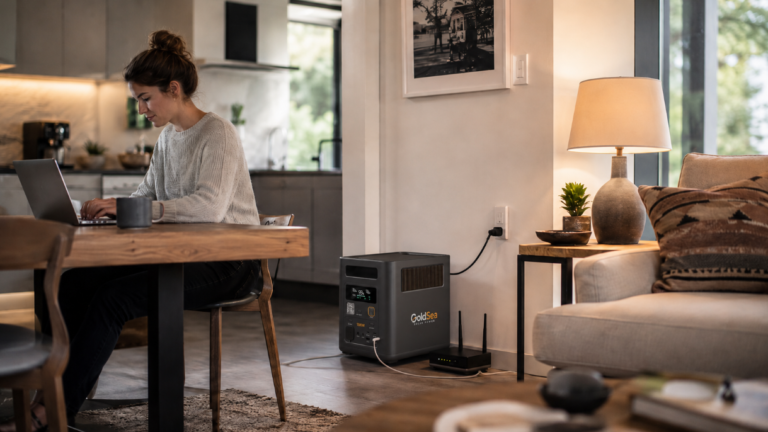
What users care about is still whether the product can solve real problems. Can it keep a router, phone, lights, and a small refrigerator running during an outage? Can it power a rice cooker, projector, or car fridge during a camping trip? When paired with solar panels, can it recharge quickly enough during the day? If it sits unused for long periods, will the battery remain stable?
These are not new questions, but they are the questions that decide whether a portable power station is actually useful.
That is why mature lithium-based chemistries, especially LFP, will likely remain dominant in the consumer market for the near future. They already have strong production experience, along with clearer safety and cycle-life records. For home backup, camping, RV travel, and short-term off-grid power, that is more practical than chasing a new battery concept that has not yet entered the consumer market at scale.
Still, sodium-ion’s return to the industry conversation is worth watching.
It shows that the storage market is expanding. Portable power stations used to be seen mostly as outdoor equipment. Now they are being placed within a larger framework that includes home emergency power, grid resilience, and solar energy storage. When automakers, battery companies, and energy firms invest in new battery chemistries, it suggests that backup power is moving beyond a niche consumer category and closer to a form of household energy infrastructure.
That shift will not immediately change the products on shelves today. But it may gradually influence the products that appear over the next few years. More battery chemistries competing in the market could eventually mean more price tiers, more specialized use cases, and more product choices for home, outdoor, and stationary storage.
Portable power stations used to be easy to define as outdoor products.
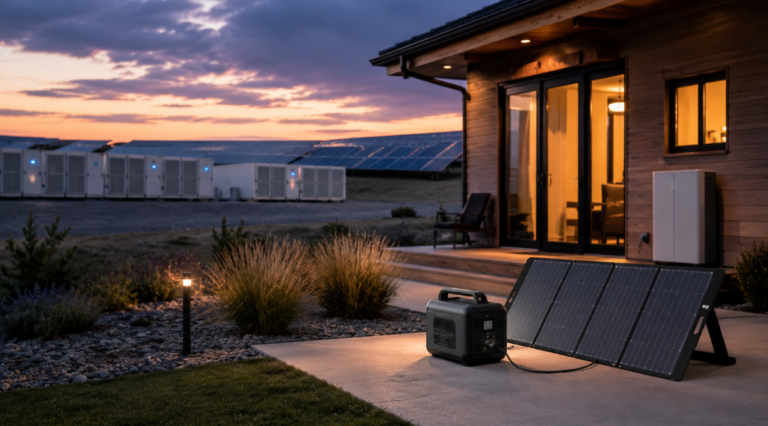
Camping, RV travel, fishing, and weekend trips were the most visible use cases. That market still exists, and it will continue to grow. But portable power stations are also taking on a larger role in home energy planning.
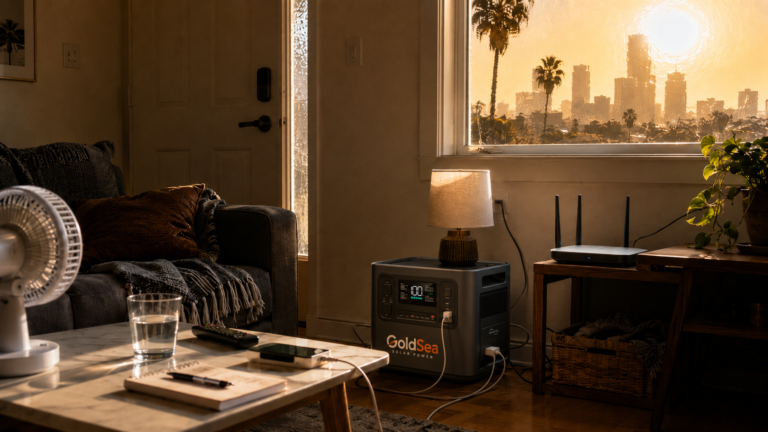
During an outage, they can keep phones, lights, routers, small refrigerators, and even some medical devices running. When paired with solar panels, they can provide short-term off-grid power. In regions facing extreme weather, summer peak demand, or grid instability, they can also act as a layer of household energy protection.
This is why changes in battery technology will eventually matter to ordinary consumers.
Consumers do not need to understand every technical detail of sodium-ion, LFP, NMC, or solid-state batteries. But they should understand that energy storage is becoming more important and more segmented. Future products will not compete only on capacity and output power. They will also compete around specific use cases, battery chemistry, safety design, and cost structure.
Sodium-ion is one signal in that broader shift.
It is not the end of lithium. It is not an overnight revolution. And it is not a reason to ignore the mature portable power products available today.
What it really shows is that the energy storage market is entering a wider phase.
Lithium built much of the foundation for modern energy storage products.
Sodium-ion may not replace that foundation. But in a larger energy system, it may become another valuable tool.