Industry Insights
Heat Waves Are Making Backup Power a Home Planning Issue
July 2, 2026
Share:
Share:
When the air conditioner is running all afternoon, the refrigerator never stops cycling, phones are charging, and someone is trying to keep a router online for work, a heat wave stops being just a weather story.
It becomes a power question.
That question is getting harder to ignore. Across much of the central and eastern United States, the National Weather Service warned this week that dangerous, potentially record-breaking heat would intensify, with heat index values likely to exceed 100°F in many areas.
For households, the problem is simple: the hotter it gets, the more everything depends on electricity. Cooling, food storage, communication, internet access, lighting and basic comfort all begin to lean on the same grid at the same time.
That is where this summer’s heat wave becomes more than a seasonal inconvenience.
PJM, the largest U.S. electric grid operator, said demand was expected to reach 166.3 gigawatts around 6 p.m. EDT Thursday, a level that would break its all-time demand record. The operator serves 67 million people across the Mid-Atlantic, South and Washington, D.C. region.
Reuters reported that PJM issued a low-voltage alert and asked power plants to maximize output as temperatures pushed toward 100°F in parts of its territory. Wholesale electricity prices also jumped sharply in the Virginia zone, where data-center demand is already a major source of strain.
None of that means a blackout is guaranteed. Grid operators prepare for these conditions, and reserve power can be called on when needed.
But the direction is clear enough. Heat waves are arriving at a time when homes, data centers, electric vehicles and air-conditioning load are all pulling harder on the system. A normal summer afternoon can now become a serious grid-management event.
For a homeowner, that does not always show up as an energy-market chart. It shows up as a more practical concern: what still needs to run if the power goes out for a few hours?
Portable power stations used to be marketed mostly around camping, RV trips and weekend outdoor use. That still matters. But the home use case is becoming harder to separate from the outdoor one.
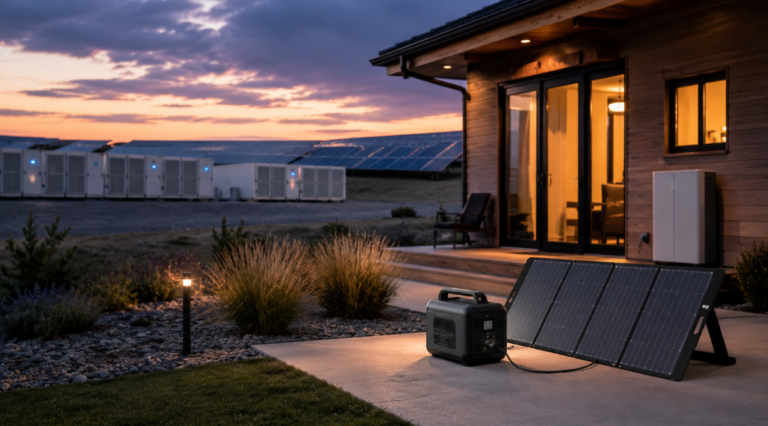
A battery that can run a camping light can also keep a phone charged during an outage. A unit used for a portable fridge on a road trip can also protect food or medicine for a short period at home. A solar panel used outdoors can become part of a backup charging plan when the outage lasts longer than expected.
The point is not to turn every house into an off-grid cabin. Most families do not need to think that way.
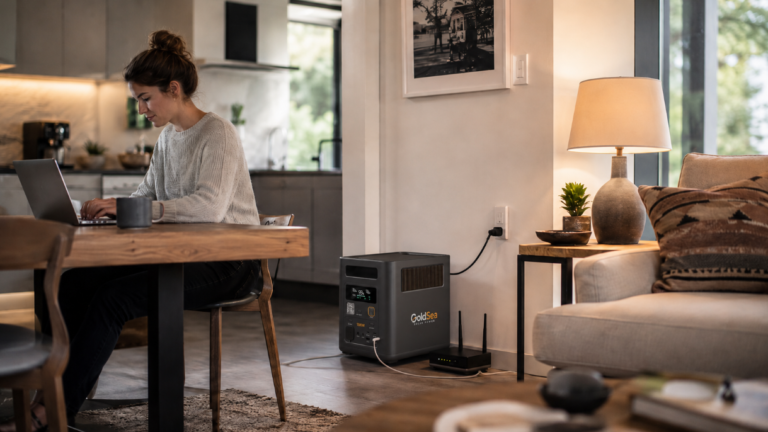
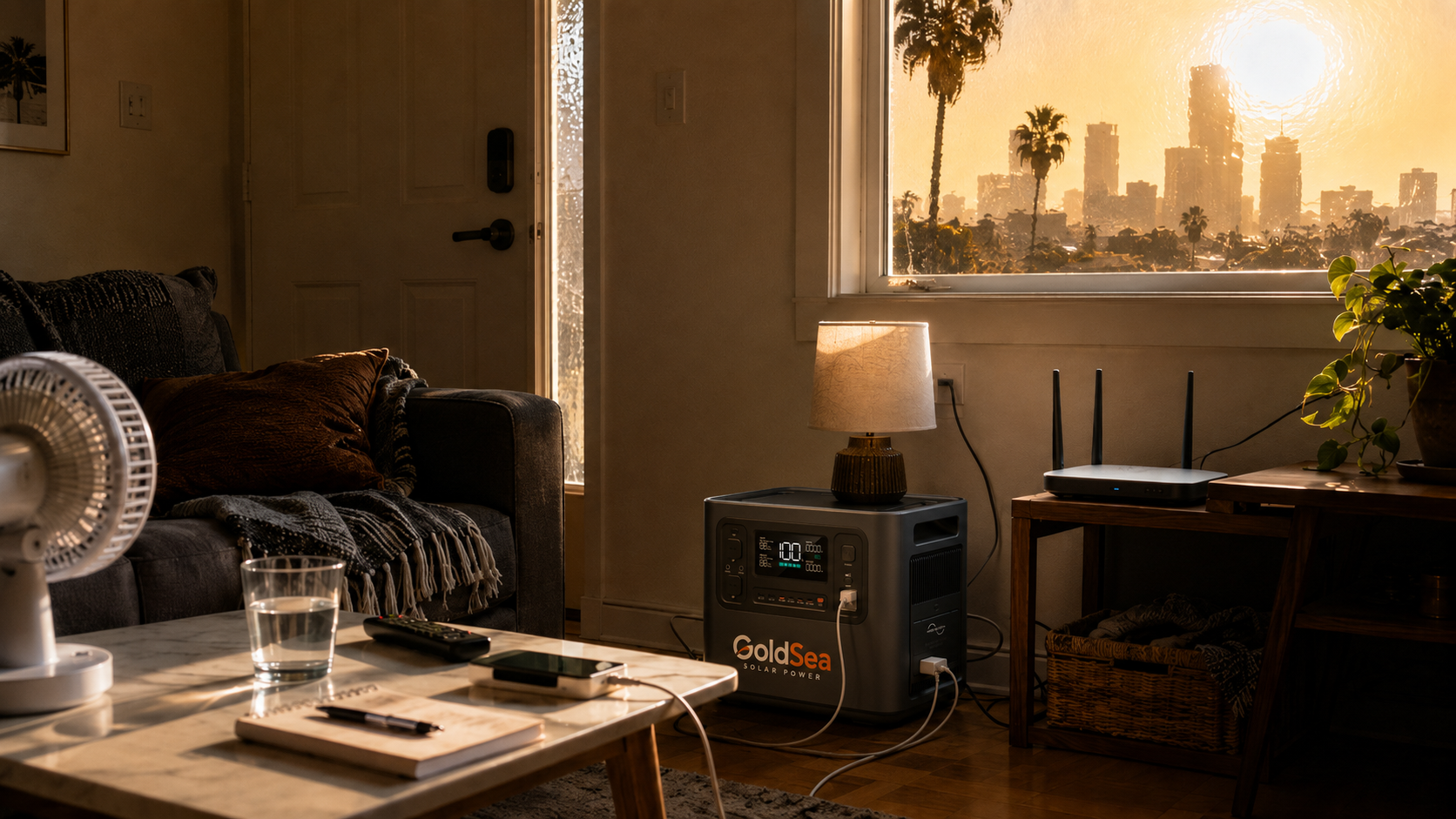
The more realistic use case is smaller and more useful: keeping essential devices available when the grid is under stress. That might mean phones, a router, LED lights, a fan, a laptop, a small medical device, or a compact refrigerator depending on the size of the power station and the load.
That last part matters. Backup power is not magic. Capacity and output limits decide what a portable battery can actually do.
A portable power station should not be treated as a full-home generator. In most cases, it will not run central air conditioning, large heating equipment, an electric oven, or multiple high-wattage appliances for long. Bigger systems can handle more, but the same rule still applies: the battery is only as useful as its capacity, inverter rating and the devices plugged into it.
That is why the best backup plan starts with a list, not a product page.
Which devices matter most during a short outage?
How many watts do they use?
How long do they need to stay on?
Can any of them be used in rotation instead of all at once?
A fan for one room, a router, a few lights and charged phones are a very different load from an air conditioner or a full-size refrigerator. The right system depends on that difference.
This is also where portable power can be more practical than it first appears. A smaller battery may not keep a house comfortable during a long heat wave, but it can keep communication, lighting and basic airflow available during the first few hours of an outage.
That is often the gap households actually need to cover.
Solar charging adds another layer, but it should be understood realistically.
A portable solar panel will not deliver the same output in cloudy weather, shade, bad placement or late afternoon light. It also takes time. Anyone expecting unlimited power from a small panel will be disappointed.
Still, solar can matter when outages stretch beyond a single battery cycle. It gives households a way to put some energy back into the system during daylight hours, especially for lower-power essentials.
That makes the combination of a portable power station and solar panel less about independence and more about flexibility. It can buy time. It can extend use. It can reduce the need to rely only on what was charged before the outage began.
For families facing heat waves, storms or strained grid conditions, that flexibility is becoming part of the conversation.
The mistake is waiting until the lights go out.
Before the next heat wave, households do not need to buy the biggest battery they can find. A better first step is more basic: write down the devices that would matter most in an outage, check their wattage, and decide how long they need to run.
From there, backup power becomes a planning decision instead of a panic purchase.
A portable power station will not replace the grid. It will not cool an entire home through a major outage. It should not be sold that way.
But for the devices that keep a household connected, lit, informed and a little more comfortable, it can be a useful part of a heat-wave plan.
And as summers put more pressure on the grid, that plan is starting to look less like a niche outdoor concern and more like ordinary household preparation.